
The Transformative Power of Art: An Interview with Artist Fabrizio Ruggiero
December 1, 2015
by Ardra Manasi
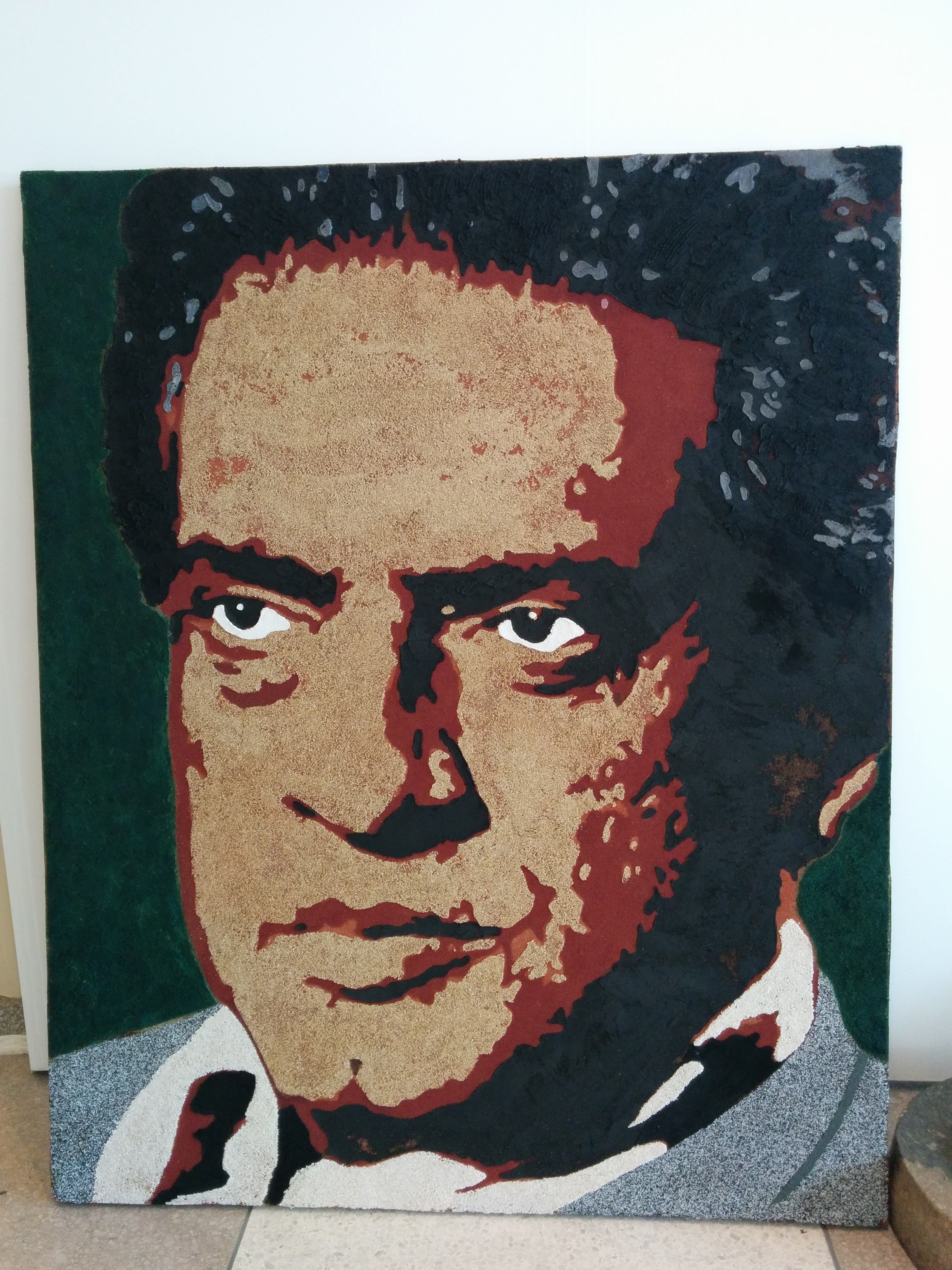
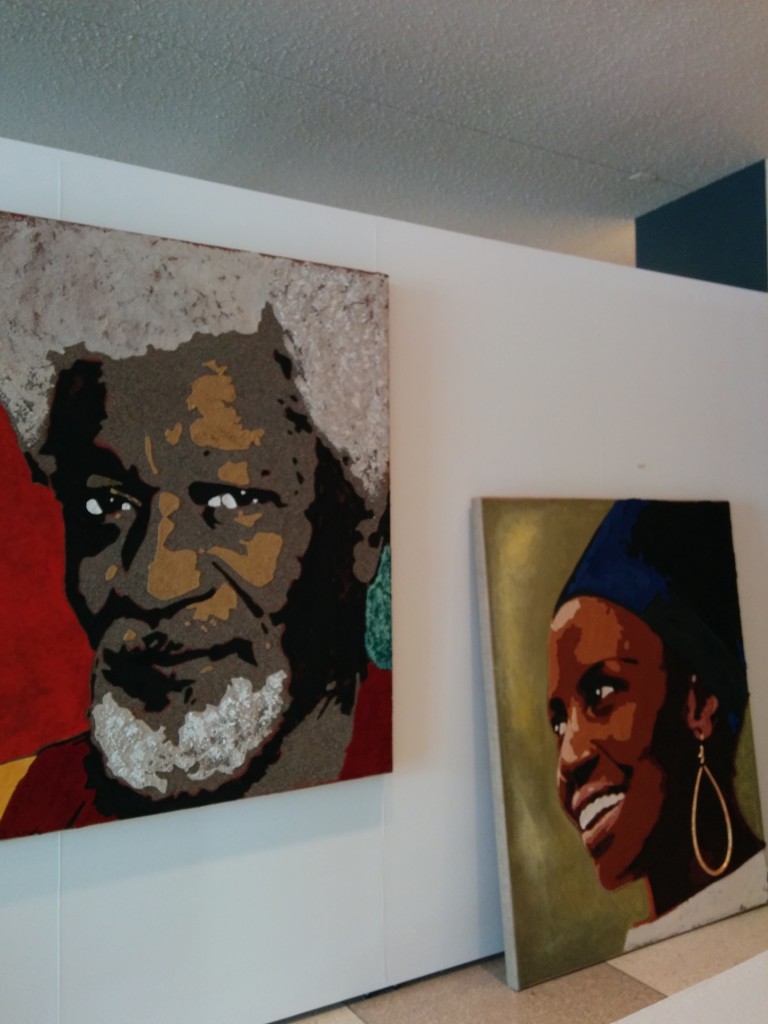
Fabrizio Ruggiero is an Italian artist and sculptor, renowned for his fresco paintings. In June 2015, Ruggiero’s collection of 16 portraits was part of the exhibition at the United Nations titled, "The Transformative Power of Art." The portraits were of global thinkers and artists such as Pierre-Claver Akendengu, Maya Angelou, Joan Baez, Satyajit Ray, Audrey Hepburn, Vassily Kandinsky, Umm Kulthum, Gong Li, Miriam Makeba, Edgar Morin, Fatemeh Motamed-Arya, Okot p’Bitek, Sebastio Salgado, Wole Soyinka, Malala Yousafzai, and Ngugi Wa Thiong’o.
On June 23, 2015 in NYC during the exhibition at the UN, I had a conversation with Fabrizio about his work, study of Buddhism, upbringing in Italy, and love for India.

A: Tell me more about The Transformative Power of Art?
F: The exhibition has 16 portraits of artists from different disciplines, including writers, singers, photographers, and philosophers. It also reflects on climate change as a global issue. I’ve created sculptures using natural elements—reeds, rock structures—that act as totems, silent performers reminding us of what’s happening to humanity: war, famine, refugee crises...
Among the portraits is the French philosopher Edgar Morin. He distinguishes between culture — which highlights the differences among people — and civilization, which focuses on the commonality of all human beings. We should focus more on civilization to see ourselves as part of a united humanity. I believe Indian culture shares this concept?
A: Yes, ‘vasudhaiva kutumbakam’ — the whole world is one family.
F: Exactly. Similarly, Greek philosophy speaks of ‘Gaia’ — Earth as a whole, alive and sacred.
A: I was delighted to see Satyajit Ray among the portraits. Have you seen his films?
F: Yes, a few. I believe he came to Italy, perhaps in the 1950s or '60s. In Italy, we had similar filmmakers portraying common people and their lives. I could relate to that. In 1972, I traveled from Europe to India — it was a turning point for me.
A: What was it like, arriving in India as a European?
F: By the time of my second trip to India (2000–2003), I was working on the Global Pagoda Project in Mumbai — the world’s largest Buddhist stupa. My first connection with India came earlier, in 1967. I was 20 when I heard Jiddu Krishnamurti speak in Rome. His clarity was striking, and his words deeply influenced me.
In 1972, I was in Afghanistan and at a crossroads. I could have returned to my financially stable life in Italy, but I felt confined. So I chose India instead — a symbol of freedom. I spent that year immersed in a different rhythm of life. Eventually, I began spending summers in Italy and winters in India.
A: Would you say India became a second home?
F: Yes, in many ways. I spent time in Banaras studying Sanskrit, and practiced Theravāda Buddhism in India and Sri Lanka. It was liberating.
A: Did India influence your artistic work?
F: Absolutely.
A: What influence was most profound?
F: Both India and Italy share deep historical roots. In India, I found a past that’s still alive in everyday life. That was compelling. I’m also fascinated by northern Pakistan and Afghanistan — the cradle of the Gandhāra school of art, a beautiful Indo-Greek fusion. It symbolized peaceful cultural coexistence, which deeply inspires me.
A: How was the UN exhibition commissioned?
F: In 2014, I curated a permanent exhibition at the National Museum of Cameroon in Yaoundé, honoring Pietro Savorgnan di Brazza — an Italian explorer remembered for his peaceful interaction with local communities. Unlike others, he never enslaved or exploited. This story touched many, including UN officials who later visited my studio in Italy. They invited me to create something aligned with cultural dialogue.
A: And the 16 portraits — what unites them?
F: Each individual gave voice to the voiceless, whether through words, images, or action. Their work elevated humanity.
A: Why do you work in fresco?
F: As a child, my father took me to the National Museum in Naples. I was fascinated by frescoes excavated from Pompeii — their texture, brilliance, and timelessness. Fresco was essential to the Renaissance but lost favor in the 20th century. I wanted to revive it.
A: Tell us about "Architectura Picta," the workshop you led in Tuscany.
F: In Tuscany, we explored how to create movable frescoes using traditional techniques combined with modern layering methods. The result: portable fresco panels that retain all the beauty and durability of wall-mounted works. The UN exhibition used this approach.
A: Do you believe art can change lives?
F: Absolutely. The portraits at the UN moved many viewers. I believe that art, infused with honest intention and energy, resonates with people. That vibration matters. It’s hard to explain — but when a work of art gives you something beyond words, it’s doing its job. The Latins called it *parerga* — what flows from the essence.
A: Thank you, Fabrizio, for this generous conversation.
F: I truly enjoyed it. Thank you.

